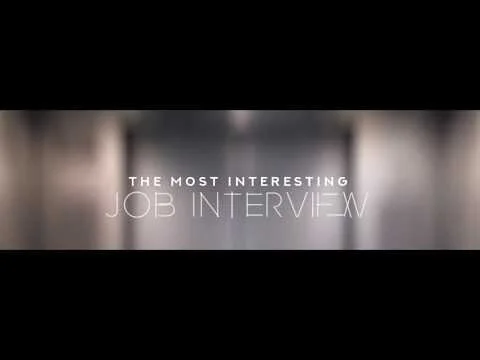
THE MOST INTERESTING JOB INTERVIEW
Client: Australian Secret Intelligence Service (ASIS)
Agency: Cummins and Partners
My Role: UI Designer
Awards: Webby Award, Best User Experience 2019. Cannes Lions, UX/UI and User Journey 2018.

The Brief
ASIS needed to find unconventional intelligence officers. Not the Hollywood version, the real kind. Sharp, curious, observant people who wouldn't be found through a standard recruitment campaign. The brief was to create something that could identify those people without ever spelling out what it was looking for.

The Challenge
The campaign had to deliberately sidestep every spy movie cliché while still feeling like it belonged to that world. The visual language needed to feel premium and cinematic, something that made candidates sit up and pay attention, without giving away the game. The UI had to carry tension and intrigue while keeping the actual assessment almost invisible.
The Experience
The solution was an interactive quiz that tested the exact traits ASIS needed — observational skills, problem-solving instincts and genuine curiosity without ever making it obvious that's what was happening. Candidates weren't filling out a form. They were being assessed from the moment they landed on the experience, and the best ones probably sensed it.
Top performing candidates received a unique code to progress to an official ASIS application form. The simulation had real world consequences.
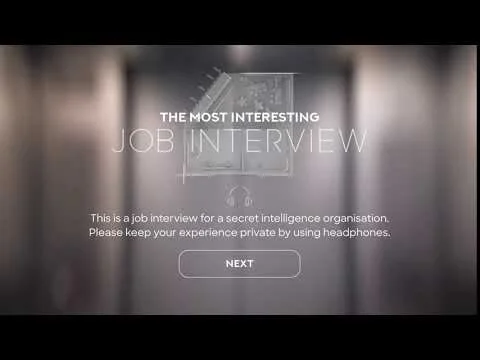
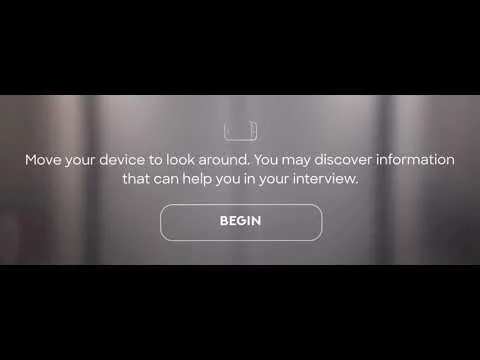
The experience was built to be interactive and immersive. Every game element was strategically planned, timed and designed to keep candidates engaged to the very end. The accelerometer added a sense of orientation and motion, giving users the ability to explore their surroundings as they moved through each visual and aural exercise.
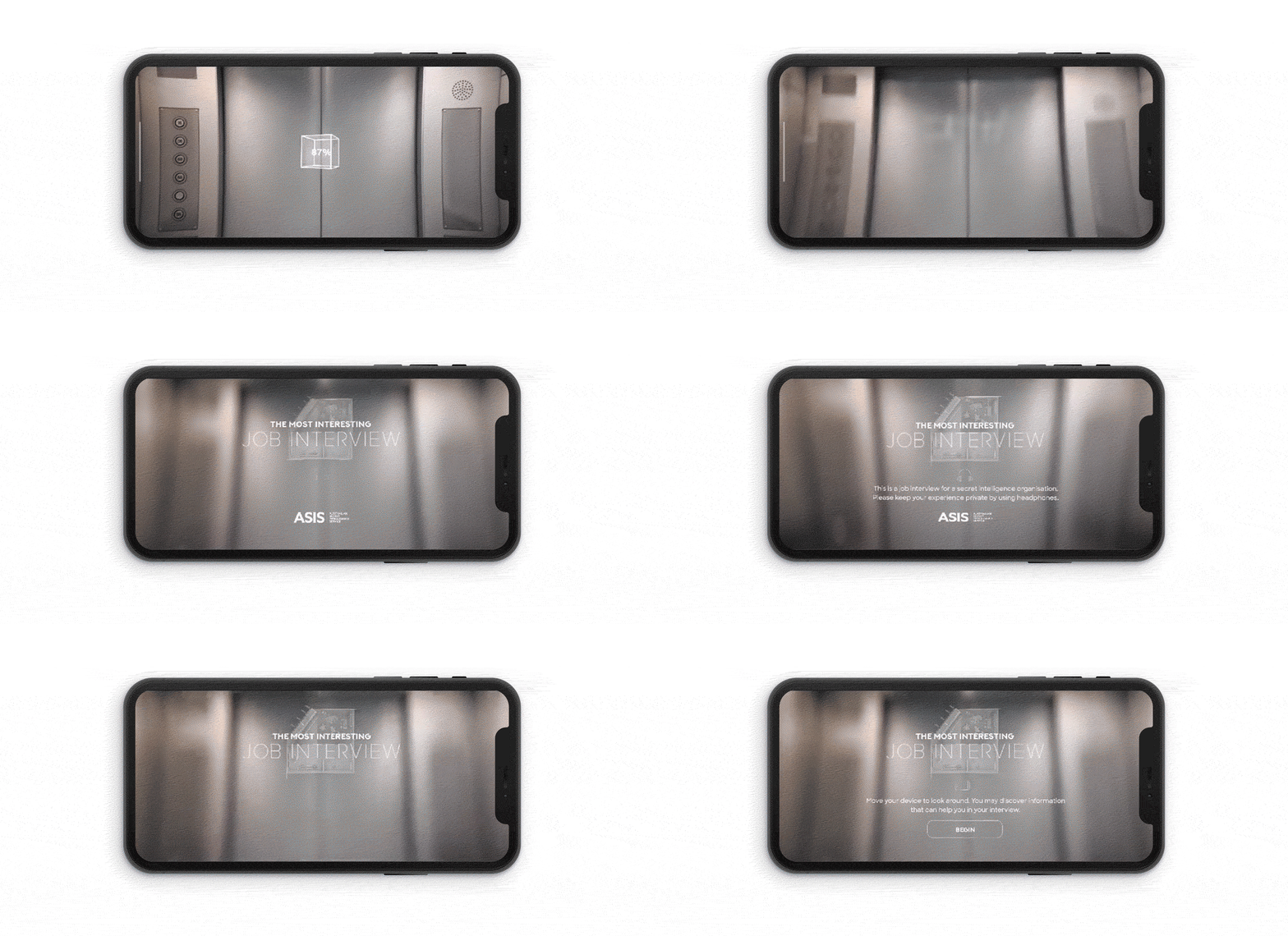
The interface had to remain visible but unobtrusive during video segments — providing progress feedback at the right moments without pulling attention away from the experience itself. Getting that balance right took multiple iterations.
Motion and Animation
Animation wasn't decorative here, it was doing real work. The motion guided the eye, signalled state changes and kept the pacing of the experience feeling deliberate rather than clunky. Subtle enough not to distract during video segments, considered enough that removing it would have been noticeable.
I art directed the animation sequences alongside the UI, making sure the motion language felt consistent with the visual tone of the project throughout.


My process
I started by reviewing the existing work and all the client feedback to understand where things had gone wrong before designing anything new. Some elements had already been created when I came on board, so the first job was to properly audit what existed rather than start from scratch.
The feedback was clear. The existing visuals felt too futuristic and the gamification was overpowering the actual objective. It felt like a video game, not an intelligence assessment. That disconnect needed fixing before anything else.
Old vs New
Stripping back was the necessary first step. I went deep into what had been built, looking at where the balance had tipped too far into game world and lost touch with reality.
The current typeface was one of the first things to go. It read as too modern and future-facing for what this experience needed to feel like. As I redesigned existing elements and built new ones, I was constantly mocking up future screens alongside them to make sure everything was working together rather than pulling in different directions.
The shift came from adding a human touch back in. Rounded corners instead of hard edges, simplified lines, a touch of warmth pulled directly from the video footage. Small changes, but the cumulative effect was significant. The experience went from feeling like a prototype of something set in 2050 to something that felt grounded, credible and genuinely unsettling in the right way.
The headline typography was also reconsidered. It needed a typeface that reflected the character of the project, something that made a statement but sat comfortably alongside everything else rather than fighting for attention.

Before vs After
The Results
In the first 48 hours, 200,000 Australians jumped on and gave it a go & test themselves out. The Most Interesting Job Interview generated more than 47.7 million dollars worth of earned PR, leading to record numbers of ASIS applications. For security reasons, the total number of agents recruited cannot be shared.